AI automation for restaurants works best in the hours when nobody is cooking. Service is a live performance, and no software should interrupt it. The work around service is different: counts, orders, invoices, schedules, menu updates and reviews. That is where a small team loses its Sunday night, and where we build AI tools and internal tools that your people approve before anything leaves the building.
The week, with the paperwork drafted
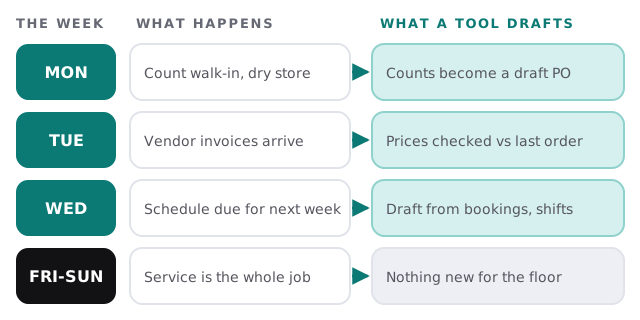
None of this needs a new habit on the line. The chef still counts, the vendor still delivers and the manager still sets the schedule. The tool only turns what already exists into a first draft.
Who feels it
| Role | The recurring chore | What changes |
|---|---|---|
| Owner | Reading invoices and reconciling them to the books | Lines that changed price are listed first |
| Chef or kitchen manager | Building the order from a clipboard | A draft order based on counts and par levels |
| General manager | Weekly schedule and swap requests | A draft schedule built around availability and the reservation book |
| Bar manager | Reordering by feel | A short list of what ran low |
Price creep is quiet
A case of anything can go up a little at a time, and no one notices because each invoice looks like the last one. A tool that reads each invoice line and compares it with the previous delivery can raise a hand the first time a price moves.
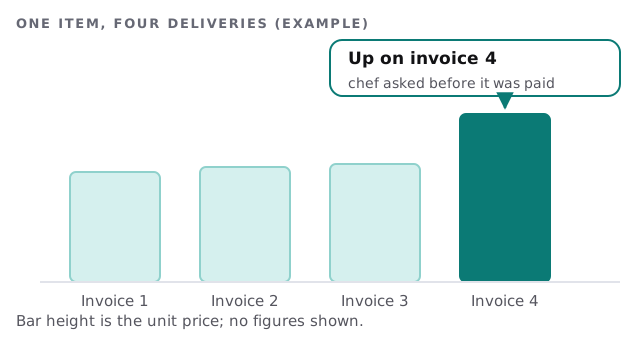
Substitutions work the same way. When the invoice says a different brand or pack size than the order, the tool flags it, and the chef decides whether it is fine.
A menu that says one thing everywhere
When a dish changes, the new version has to reach the POS, the printed menu, the website, the delivery apps and your Google listing. Miss one and a guest orders something you stopped making. A tool can keep a single source of truth, draft the update for each place and leave a checklist for a person to confirm.
Reviews, once a day
Instead of reading every review as it lands, you get one short digest each morning: new reviews, what they mention and a drafted reply for each one. You edit and post them. Complaints that name a person or a health concern go to the manager untouched, never to an automatic reply.
Where a tool stops
- Allergens and ingredients: a person answers, every time.
- Food safety logs: your team records the temperatures. A tool can remind and collect, not sign.
- Tips and payroll decisions: these stay with the owner and the accountant.
The software around a restaurant
Most restaurants already run a point-of-sale system, a reservation or waitlist book, online ordering and delivery platforms, inventory or recipe costing, scheduling with a time clock, payroll and bookkeeping. They rarely talk to each other well. We start by writing down what you have and which ones allow another tool to read from them.
The calendar sets the order
Holidays, graduation weekends and the December party season are all stress tests, and so is the slow stretch after New Year when owners finally catch up. We’d start in the quiet weeks, with ordering or invoices, and have it settled before the next rush.
What we need from you
- A few recent vendor invoices and order sheets
- Your current schedule, or a photo of the board
- The names of the systems you use
- A short list of the three chores you dislike most
After the free IT check you get a plan and a fixed quote. A real person replies within 1 business hour, Monday to Friday, 9am to 5pm Pacific. If you’d rather test the water yourself first, choosing an AI assistant for your team is a good starting point.
A restaurant runs on what happens at the pass. The tools we build work in the hours around it, and hand you the draft while you still have a minute to read it.